KlinItAll: Smart Preprocessing System
Overview
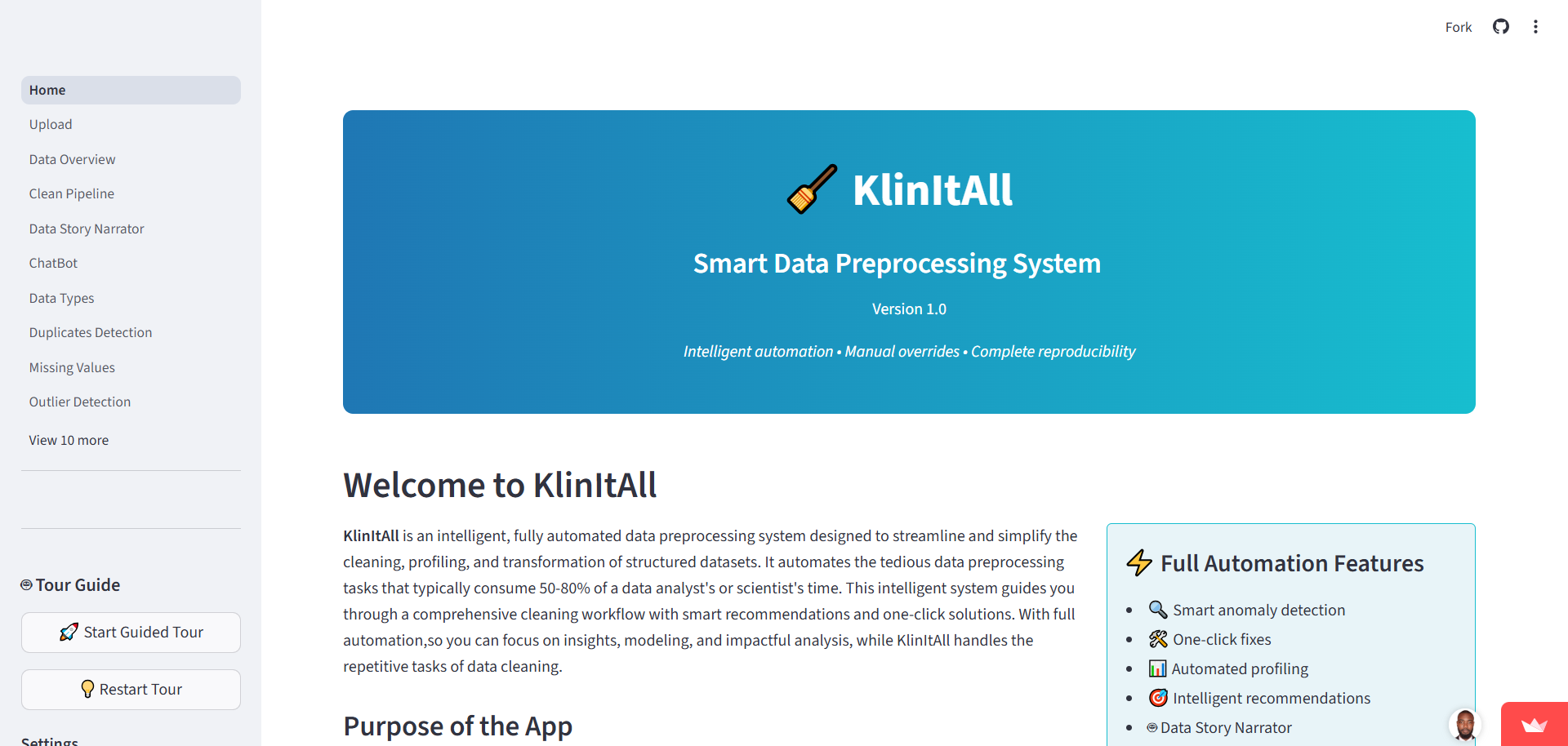
KlinItAll is a modular, production-ready, and extensible data preprocessing system designed to clean, prepare, and analyze structured datasets including numeric, categorical, text, date-time, and geospatial data for machine learning and analytics.
Built with Streamlit, KlinItAll integrates AI-powered narratives, interactive visualizations, and a context-aware chatbot to provide real-time insights, recommendations, and guidance during the preprocessing workflow.
Key Goals & Features
- Automated Cleaning: drastically reduces the 50–80% of project time usually spent on data cleaning.
- AI Narrator: Generates AI-driven narratives, highlighting trends, anomalies, and correlations automatically.
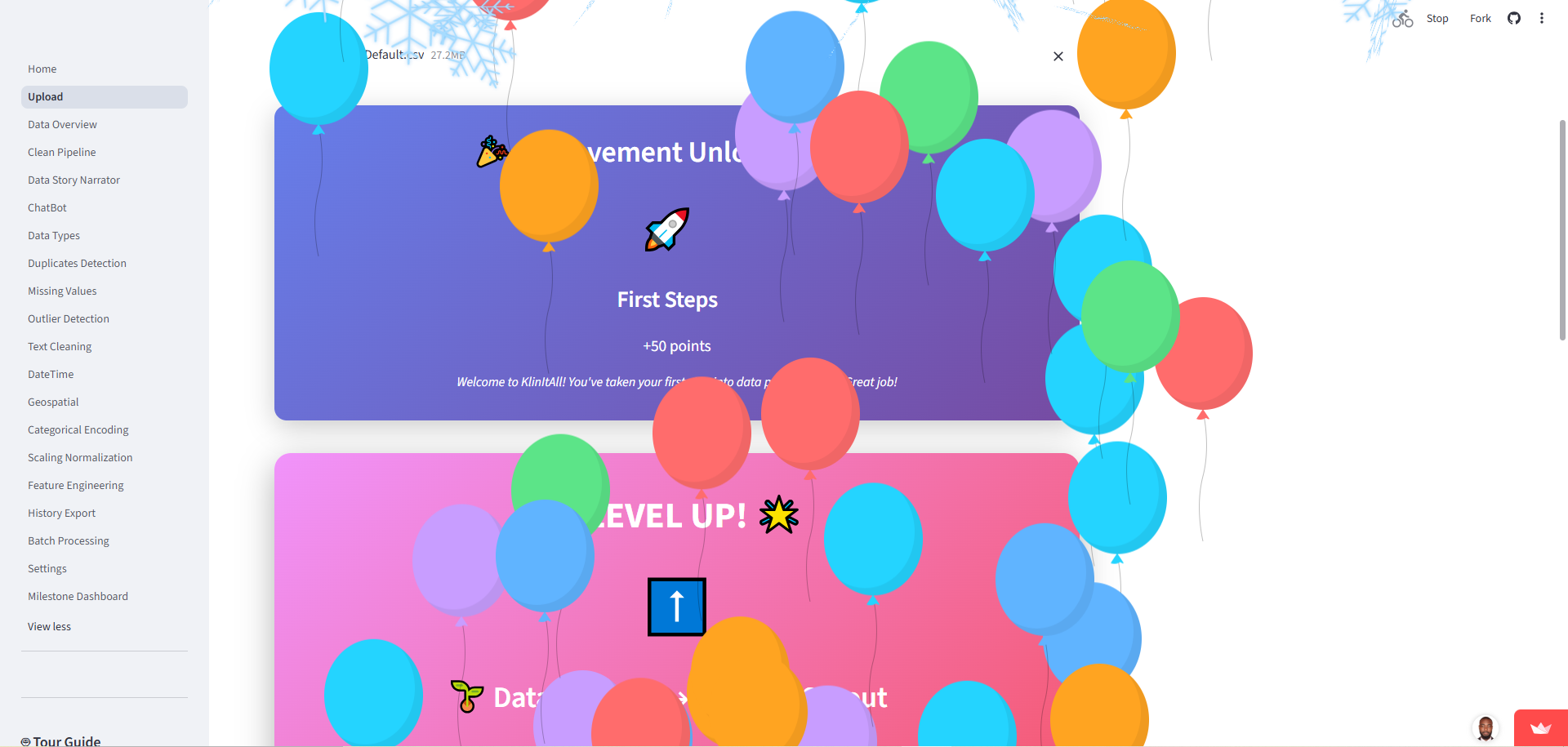
- Gamification: Includes a dynamic achievement system for process completion and milestones.
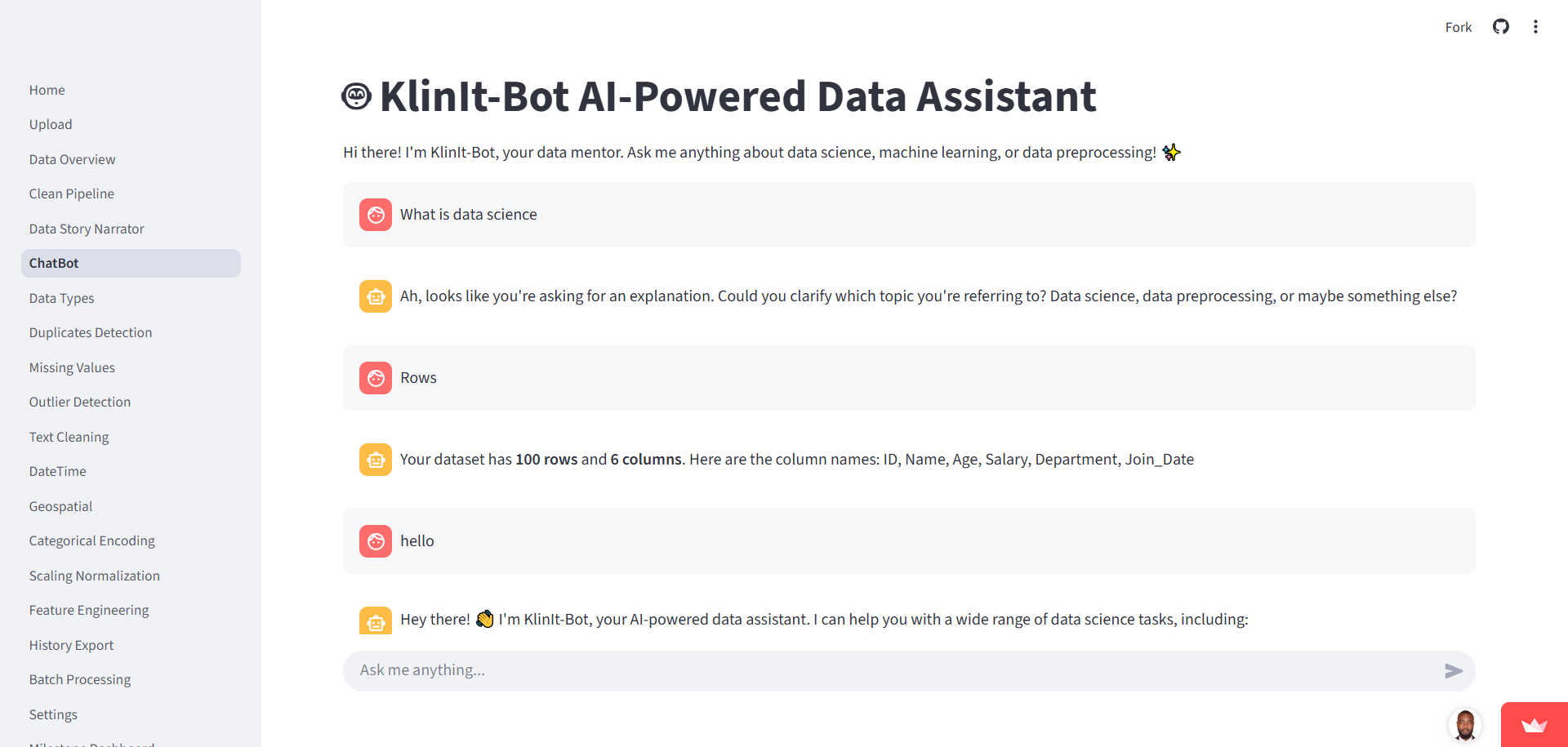
- Interactive Chatbot: A data-aware assistant that answers free-text queries about the dataset.
KlinItAll: System Documentation
1. Purpose of the System
KlinItAll addresses the common challenge in data science: 50–80% of project time is consumed by data cleaning, formatting, and preprocessing. This system automates repetitive tasks while providing intelligent guidance, enabling analysts to focus on insight generation, modeling, and decision-making.
2. Key Features Deep Dive
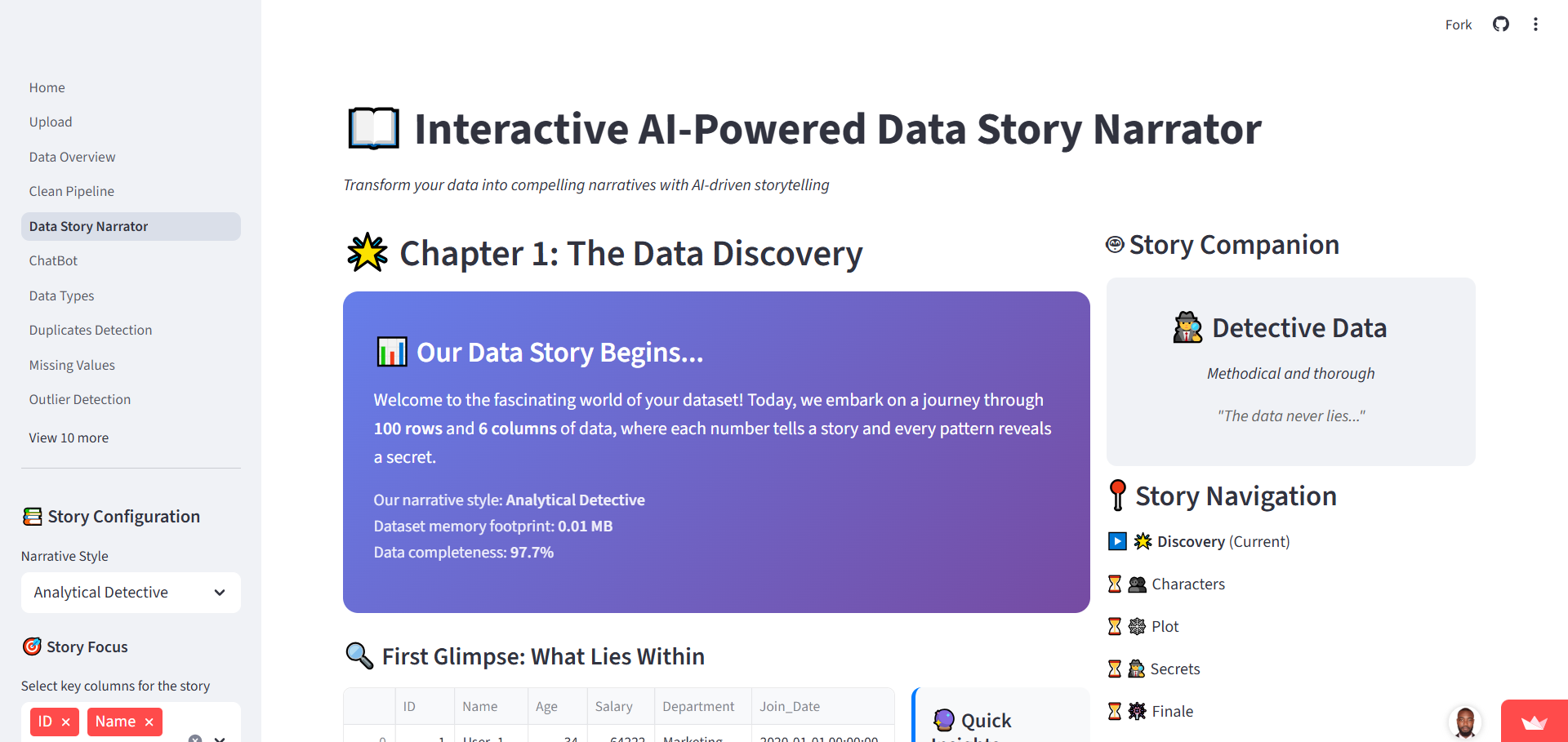
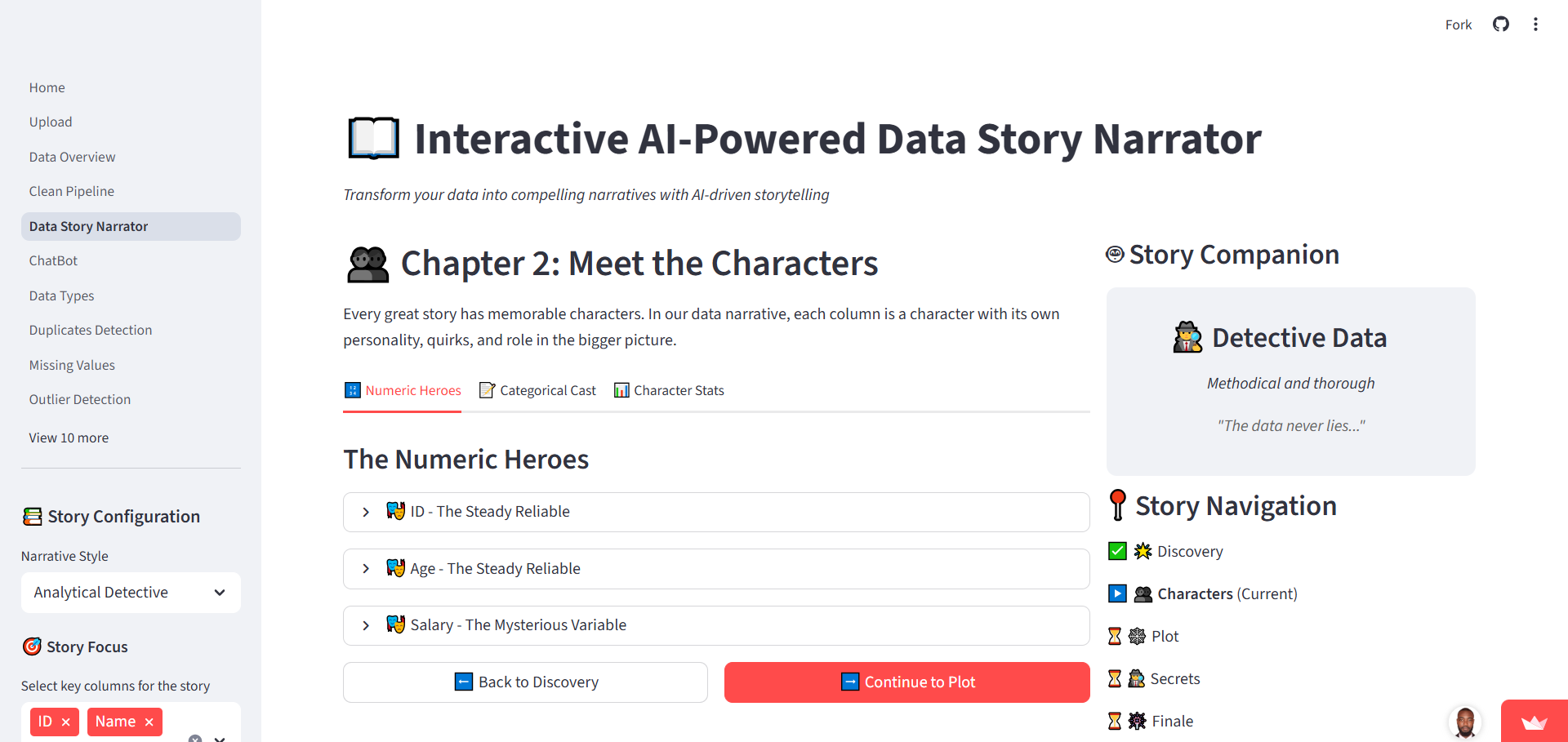
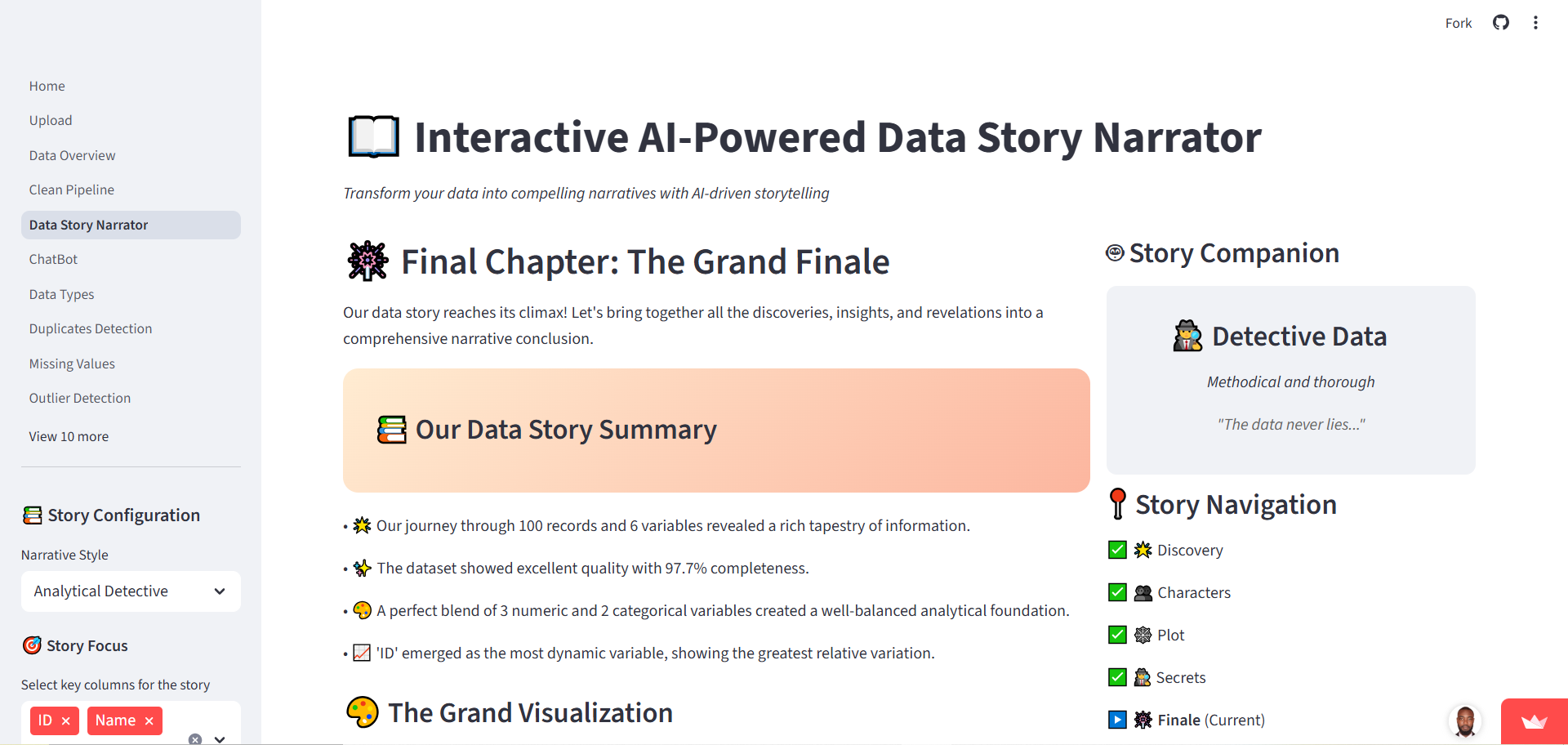
Interactive AI-Powered Data Story Narrator
The system generates AI-driven narratives for datasets, highlighting trends, anomalies, correlations, and data quality issues. It supports visual analytics (histograms, scatter plots, heatmaps) and scenario simulation.
Pipeline Summary Dashboard
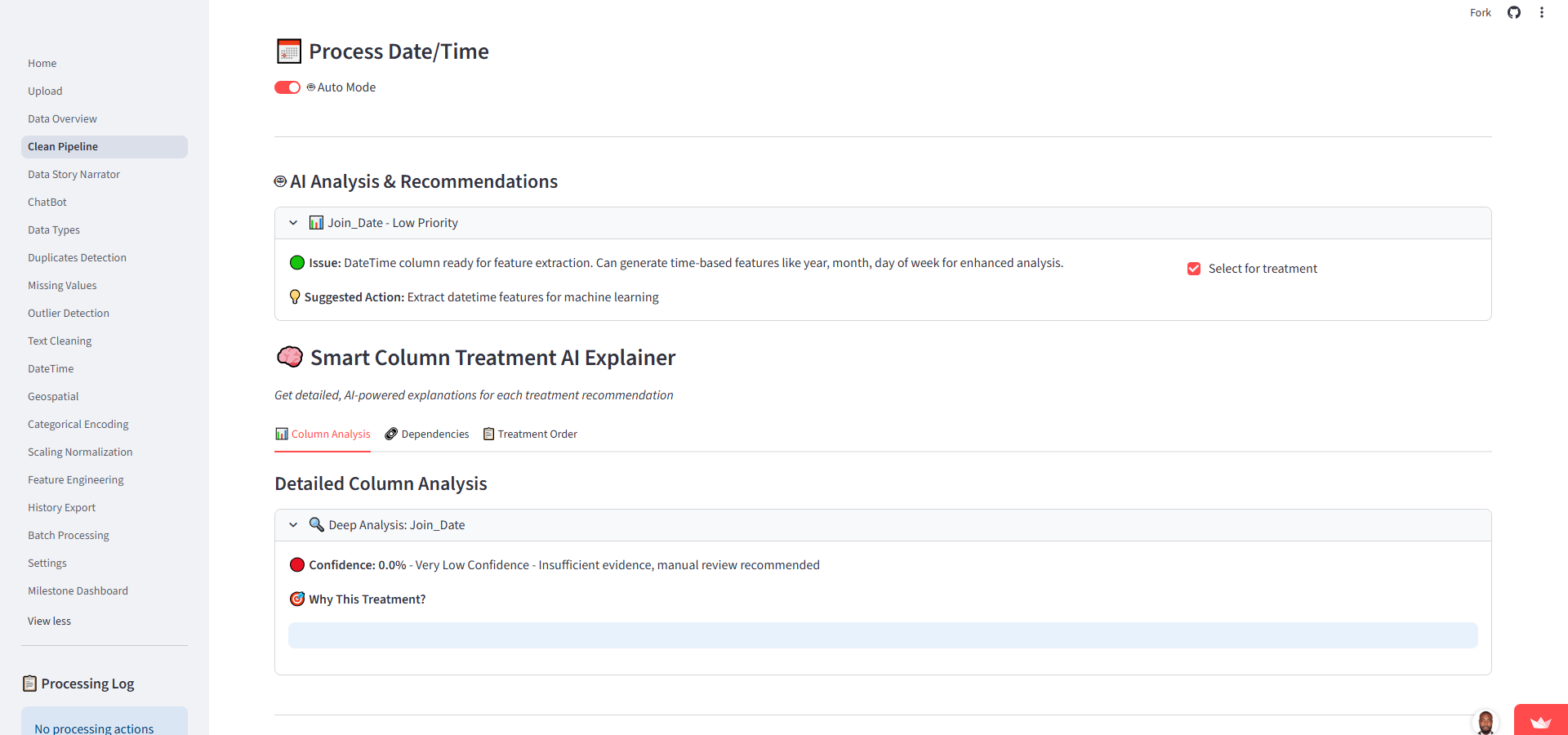
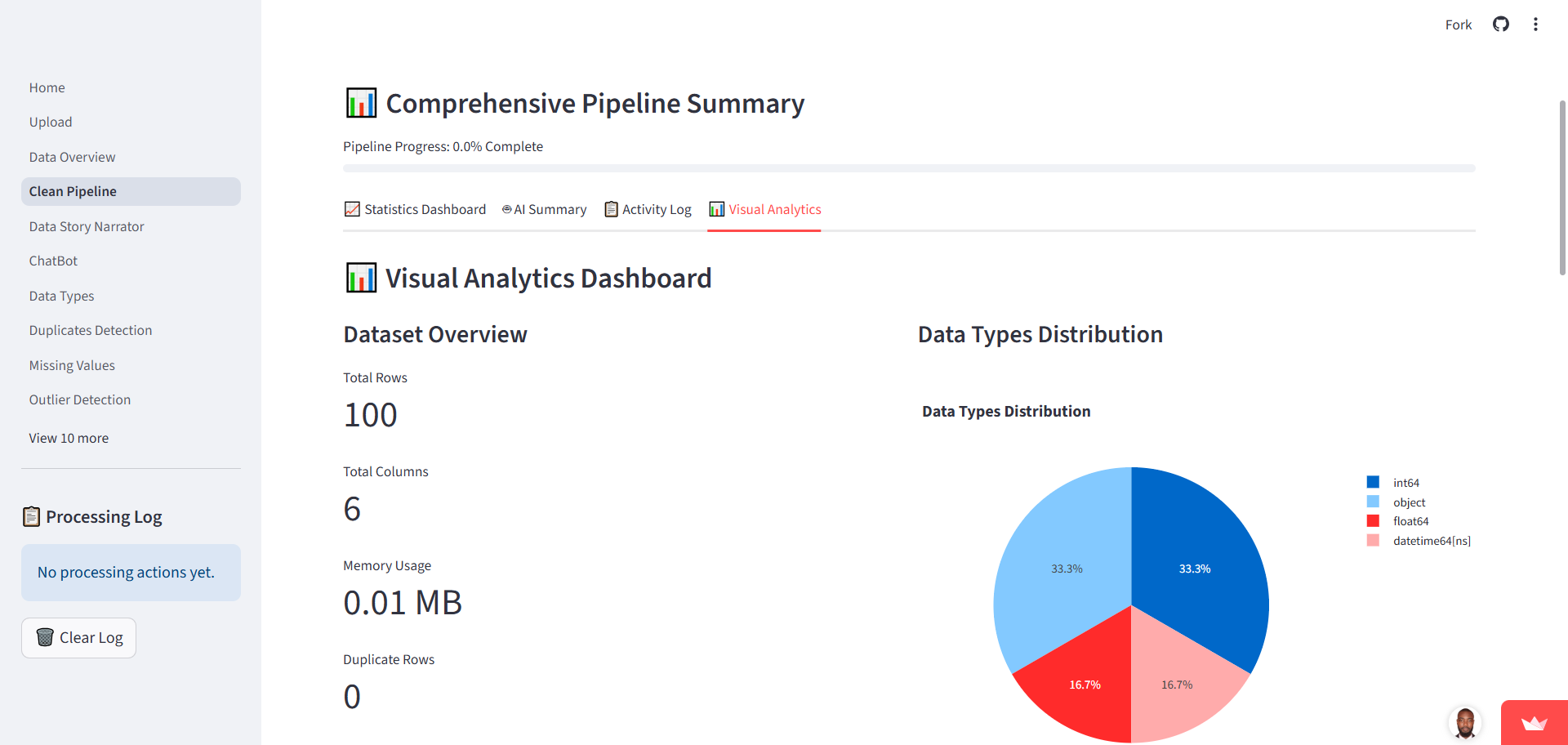
Tracks preprocessing activities in real-time, displaying statistics, progress, and AI summaries.
Milestones & Achievements
A unique gamification layer with dynamic achievements for process completion, dataset downloads, and advanced preprocessing.
Chatbot Integration
Fully data-aware: answers free-text queries about the dataset and preprocessing steps, provides navigation support, and triggers actions.
3. Core Functionalities
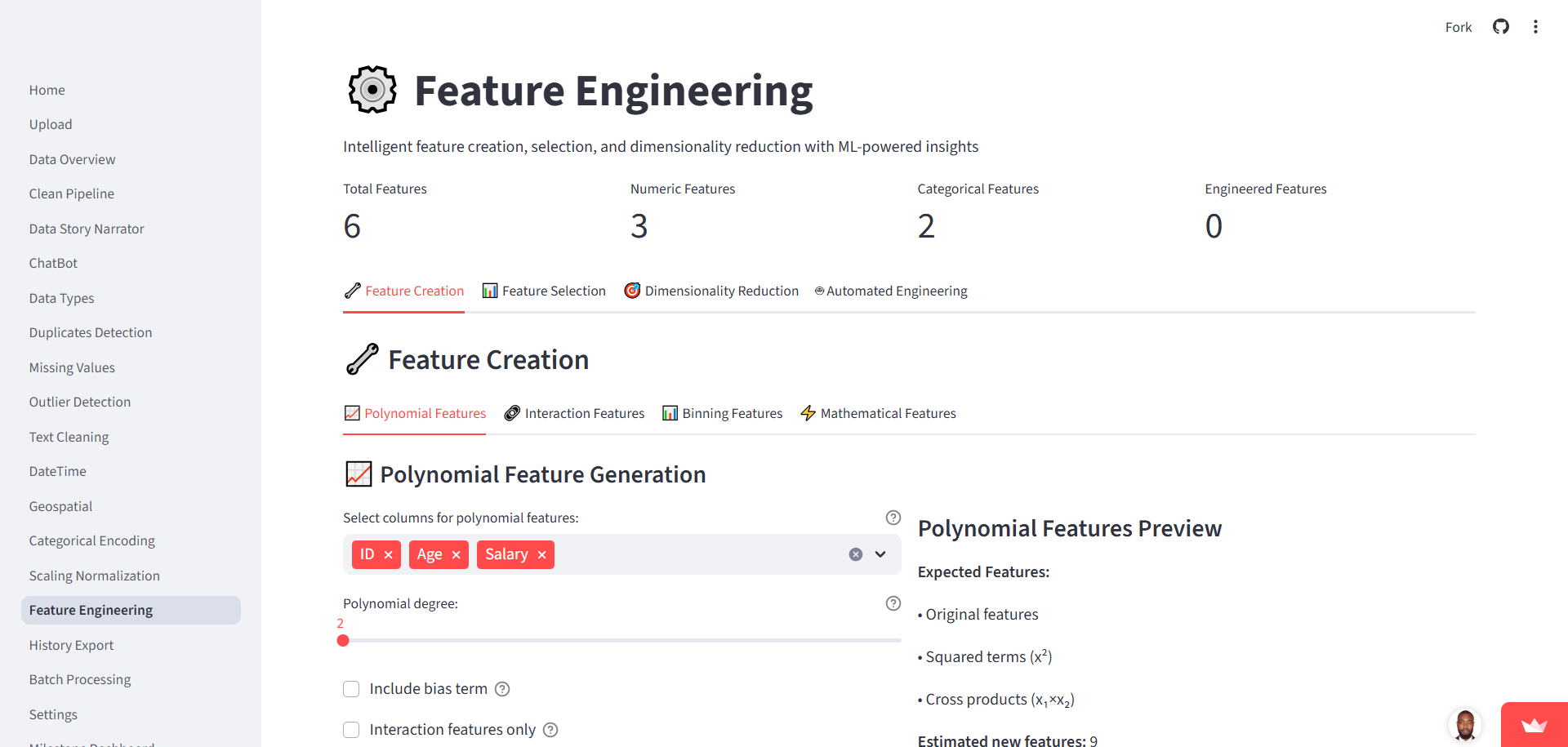
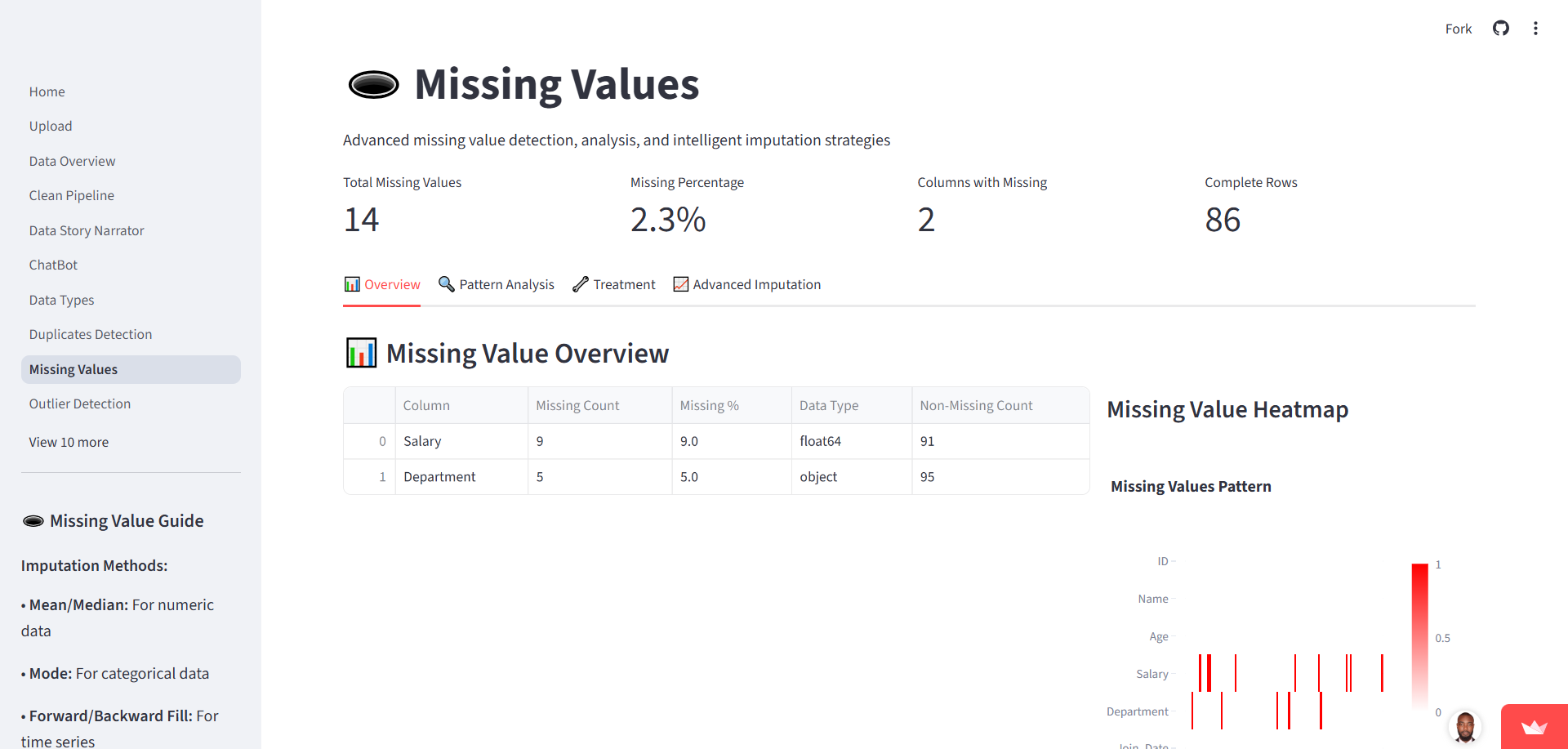
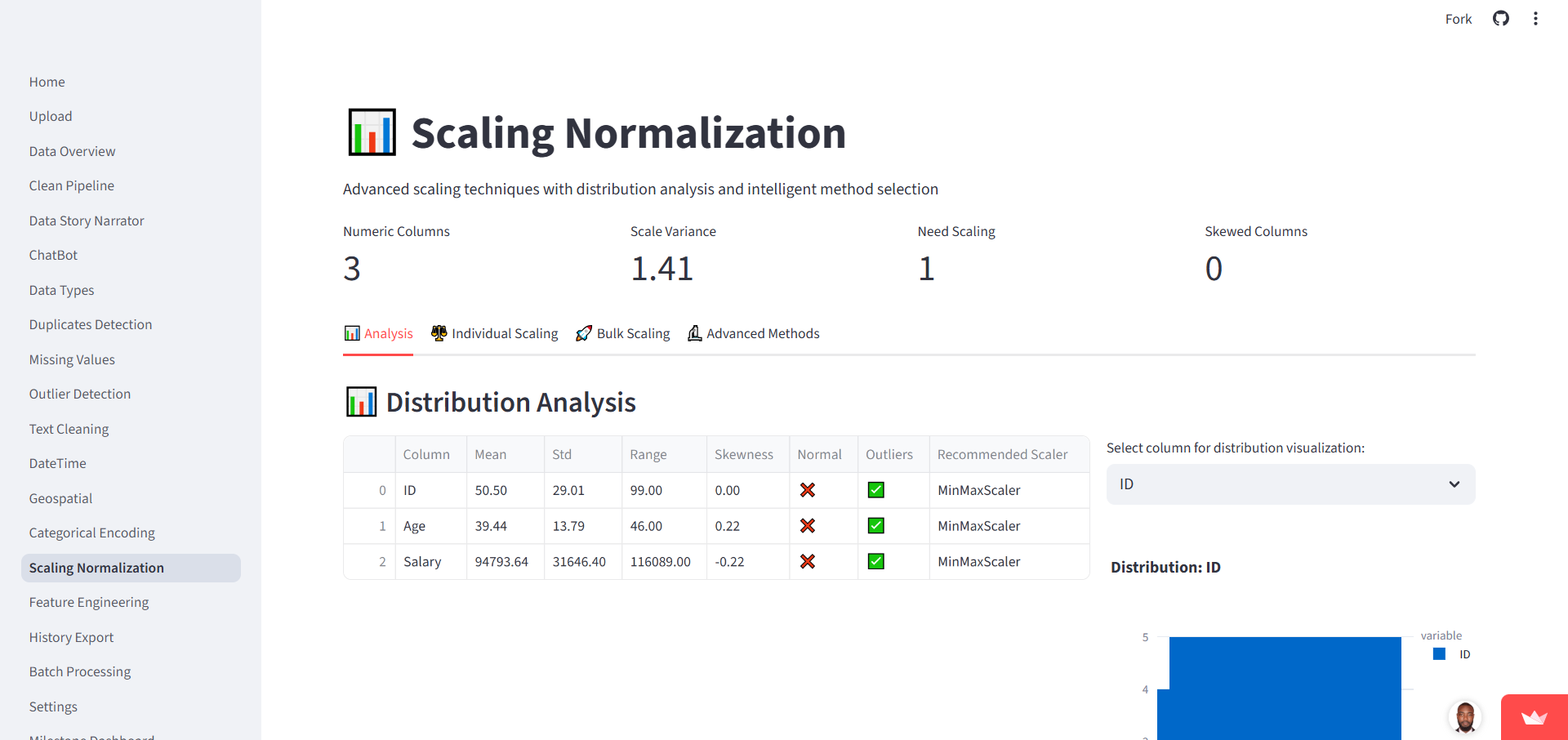
The system covers the entire preprocessing lifecycle:
4. Technology Stack
| Component | Tools / Libraries |
|---|---|
| Frontend | Streamlit |
| Data Processing | Pandas, NumPy |
| Machine Learning | Scikit-learn |
| Visualizations | Plotly, Seaborn |
| Text Processing | NLTK, TextBlob |
| File Handling | OpenPyXL, JSON |
5. Quick Start Workflow
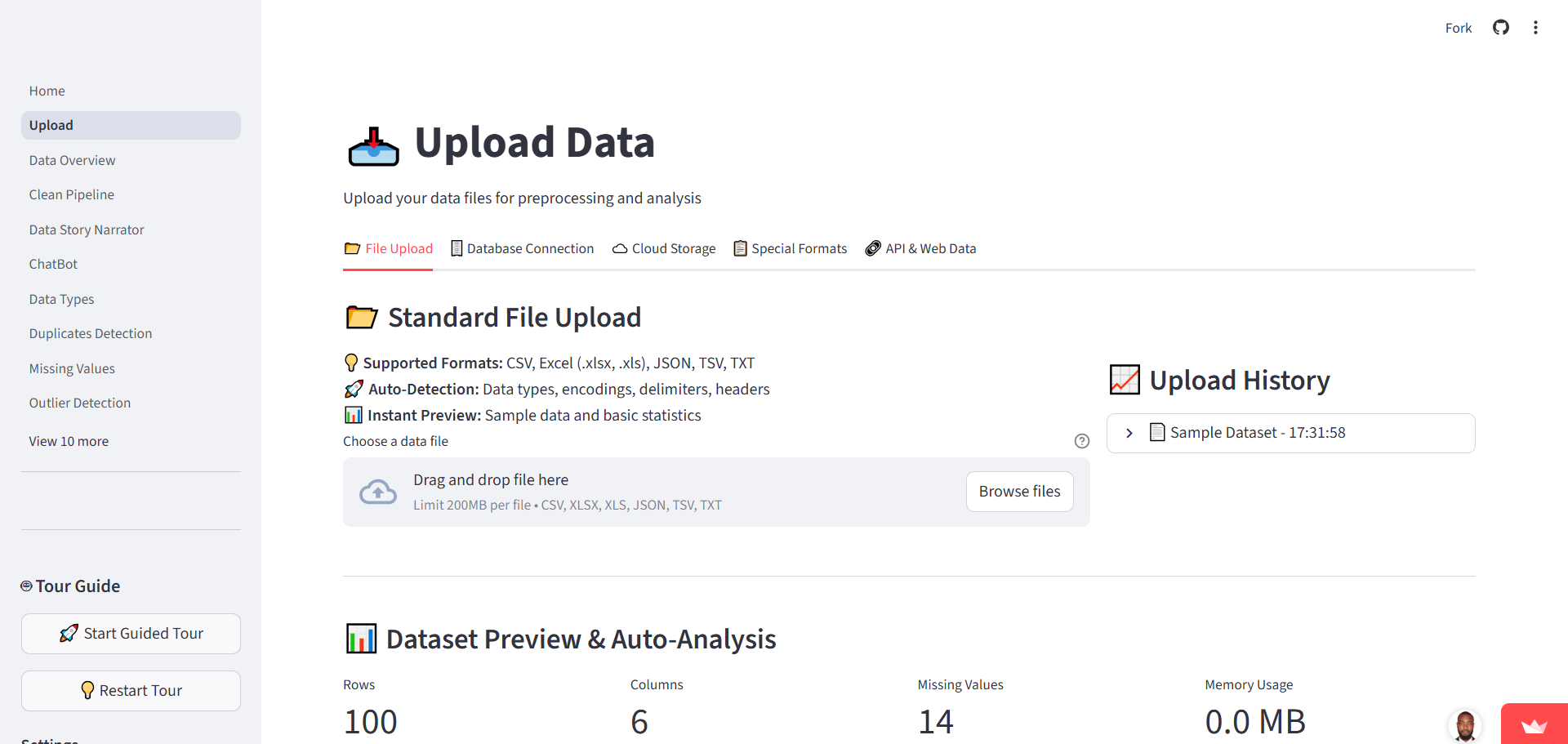
Step 1: Upload Data
Support for CSV, Excel, JSON, SQL, APIs, and Cloud sources.
Step 2: Profile & Analyze
Auto-detection of types, insights generation, and quality assessment.
Step 3: Clean & Process
Auto-suggestions for fixes, one-click repairs, and manual overrides.
Step 4: Export & Share
Download clean datasets, pipeline reports, and reproducible Python code.
6. Why KlinItAll?
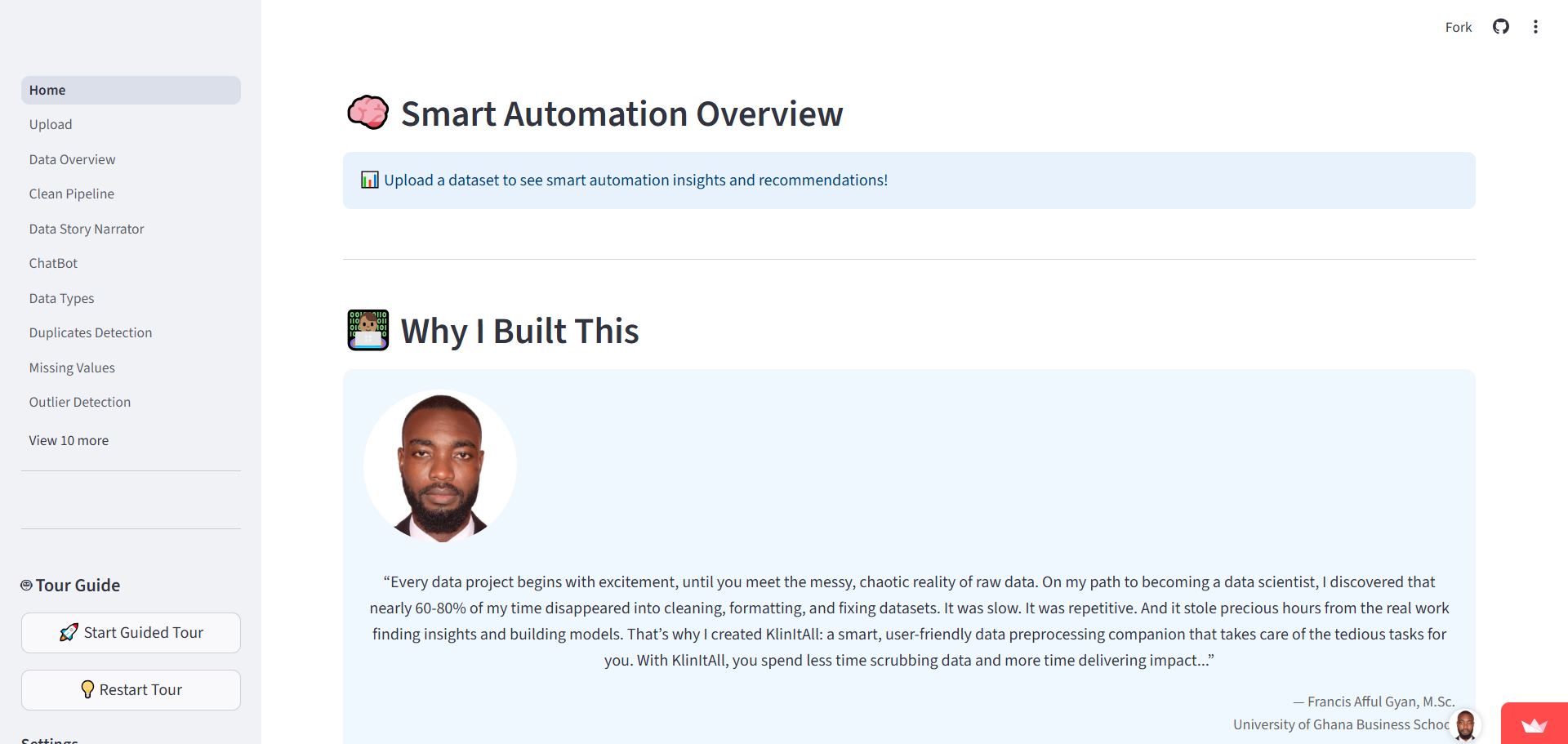
“Nearly 60–80% of time in data projects is consumed by cleaning, formatting, and fixing datasets. KlinItAll automates tedious preprocessing, allowing data scientists to focus on insights and model building.”
7. Future Enhancements
- Collaboration: Multi-user collaborative workflows with real-time updates.
- Security: Role-based access control and personalized logins.
- Audit: Logging for reproducibility and research compliance.